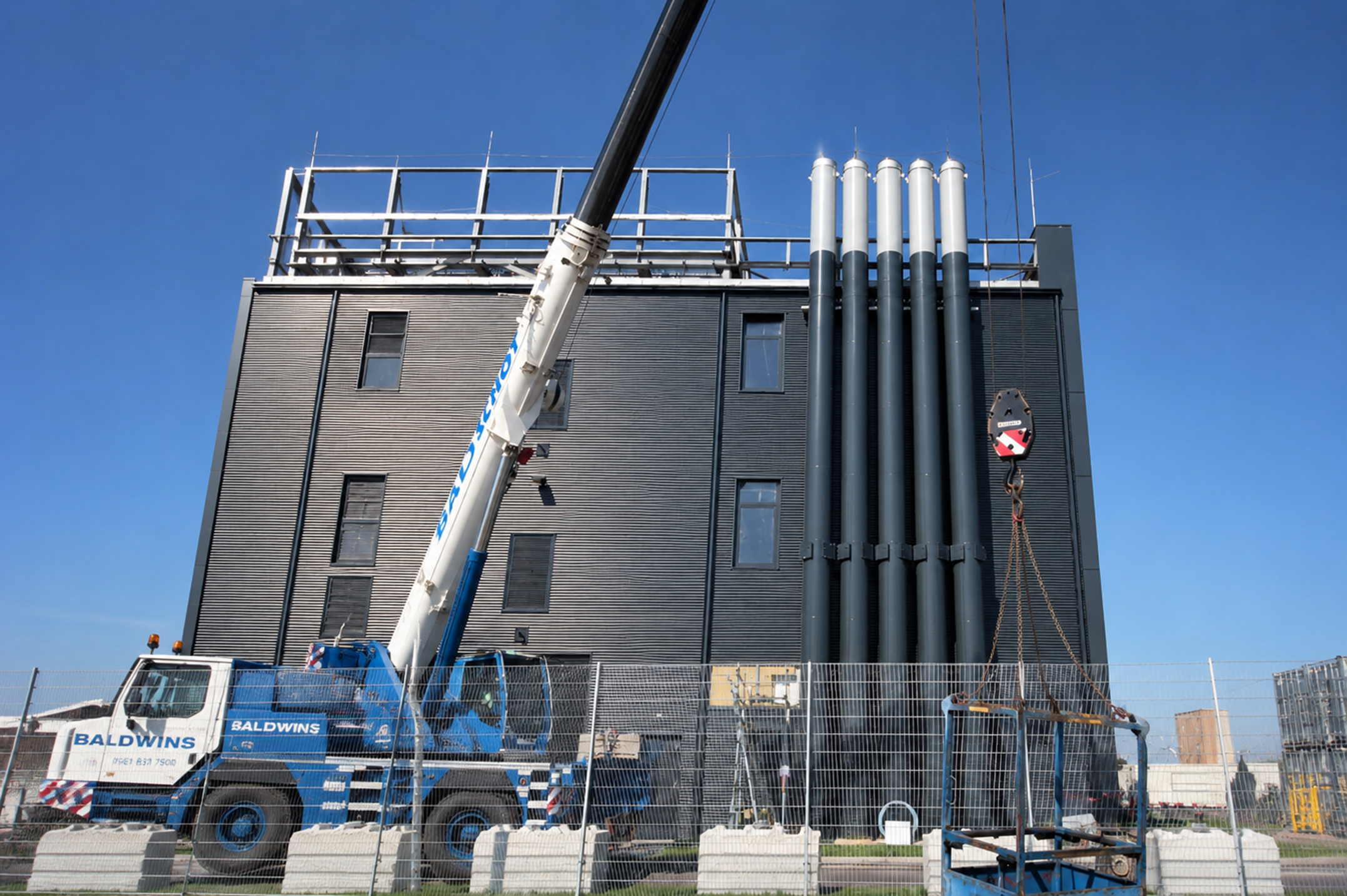
Critical Infrastructure Exhaust Systems: Ensuring 24/7 Operational Continuity
Critical infrastructure exhaust systems are essential for maintaining operational continuity in facilities where downtime is simply not an option. From data centers and hospitals to telecommunications hubs and industrial plants, these systems ensure the safe management of heat and emissions while supporting reliable 24/7 operation..
One often-overlooked component of this infrastructure is the exhaust and chimney system.During the chimney cooling time, the supply of power as well as IT equipment are put under considerable traction/pressure the ability to safely manage heat and emissions is equally essential for maintaining operational continuity. At Jeremias, we provide complete exhaust and flue solutions that support mission-critical environments, helping operators maintain performance 24 hours a day, 365 days a year.
The Importance of Thermal Continuity
Every critical facility generates heat. In data centers, servers operate continuously, producing substantial thermal loads. Hospitals rely on backup power systems that must be ready to activate instantly. Telecommunications facilities, industrial control centers, and emergency response hubs all depend on equipment that requires stable operating temperatures to function reliably.
Thermal continuity refers to the ability of a facility to maintain safe and efficient temperature management under all operating conditions. If heat is not effectively controlled or exhaust gases are not safely discharged, equipment performance can deteriorate, leading to inefficiencies, failures, or even complete system shutdowns.
Maintaining thermal continuity requires more than simply installing ventilation systems. It demands a comprehensive approach that integrates exhaust management, backup power infrastructure, environmental compliance, and long-term operational reliability.
The Critical Role of Backup Power Systems
One of the defining characteristics of mission-critical facilities is redundancy. Backup generators are installed to ensure operations continue during power outages or grid disturbances. However, these generators are only effective if their supporting systems are equally reliable.
When emergency generators activate, they produce significant volumes of hot exhaust gases that must be safely managed and discharged. Poorly designed exhaust systems can create excessive backpressure, reduce generator efficiency, increase fuel consumption, or compromise equipment lifespan.
Jeremias designs high-performance chimney and exhaust systems specifically engineered for emergency power applications. Our solutions enable generators to operate at peak performance whenever required, ensuring facilities maintain power during critical moments.
Designing for Continuous Operation
Critical infrastructure facilities are expected to operate for decades while maintaining high levels of availability. As a result, exhaust systems must be designed to withstand demanding conditions and support continuous operation without interruption.
Several factors are essential when designing these systems:
Reliability
Components must perform consistently under varying temperatures, weather conditions, and operational loads. High-quality materials and precision engineering help ensure long-term durability and dependable performance.
Redundancy
Just as data centers implement redundant power and cooling systems, exhaust infrastructure should be designed with resilience in mind. Appropriate system configurations help minimize risks and support uninterrupted operation.
Scalability
Many facilities expand over time. Exhaust systems must be capable of accommodating future capacity increases without requiring major redesigns. Modular solutions allow operators to adapt to changing requirements while maintaining operational continuity.
Compliance
Critical facilities are subject to strict environmental and safety regulations. Exhaust systems must meet local and international standards while ensuring safe management of emissions and thermal loads.
Supporting Data Centers in a Digital World
Data centers are among the most demanding critical infrastructure environments. As digital transformation accelerates and artificial intelligence, cloud computing, and edge computing continue to expand, the need for resilient facilities has never been greater.
Modern data centers depend on backup power systems capable of supporting thousands of servers during utility outages. These generators often undergo regular testing and must be prepared for immediate activation when required.
Jeremias supports data center operators with engineered exhaust and chimney solutions designed to integrate seamlessly into complex facility environments. Our systems help manage thermal loads, support generator performance, and contribute to the overall resilience of the facility.
By providing reliable exhaust infrastructure, we help data centers maintain uptime, protect valuable equipment, and ensure uninterrupted service for businesses and users worldwide.
Engineering Resilience for Mission-Critical Facilities
Every critical infrastructure project presents unique challenges. Site constraints, environmental requirements, architectural considerations, and operational demands all influence system design.
At Jeremias, we work closely with engineers, contractors, consultants, and facility operators to develop tailored solutions that address these challenges. From concept and design through installation and long-term operation, our expertise ensures that every system is optimized for performance and reliability.
Our extensive experience across mission-critical sectors allows us to understand the specific requirements of facilities where operational continuity is essential. Whether supporting emergency power generation, thermal management, or emissions control, our solutions are built to perform when reliability matters most.
Future-Proofing Critical Infrastructure
As technology evolves, critical infrastructure faces increasing demands. Facilities must support higher power densities, greater processing capacity, and stricter sustainability requirements. At the same time, expectations for uptime continue to rise.
Future-ready infrastructure requires systems that are not only reliable today but adaptable for tomorrow. Investing in resilient exhaust and chimney solutions helps facility operators prepare for future growth while maintaining the performance standards required by mission-critical environments.
Conclusion
Operational continuity depends on much more than power and cooling systems. Effective thermal management and reliable exhaust infrastructure are fundamental components of resilient facility design.
By combining engineering expertise, high-quality materials, and a deep understanding of mission-critical applications, Jeremias delivers complete exhaust and chimney solutions that support uninterrupted operation in critical infrastructure environments. From data centers to healthcare facilities and emergency power installations, our systems help ensure that essential services remain available whenever they are needed.