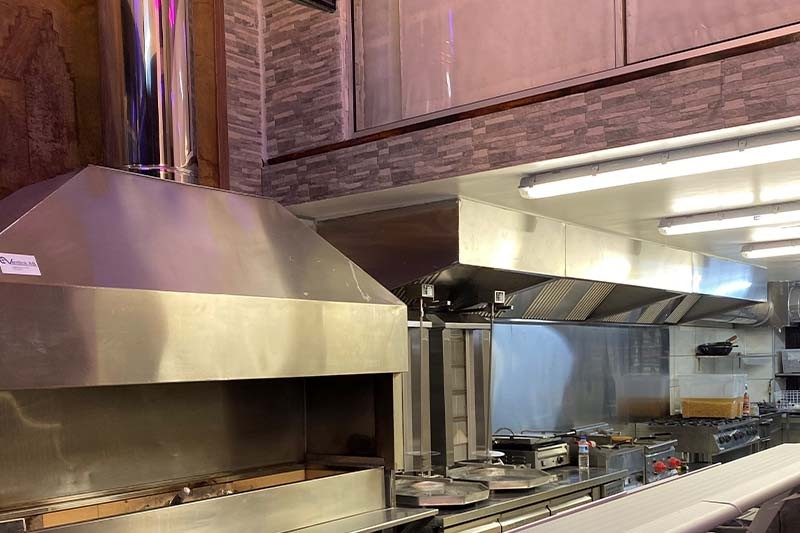
Industrial Kitchen Extract Systems
Industrial kitchens operate in some of the most demanding environments for ventilation and flue systems. Continuous production, elevated operating temperatures, grease-laden vapours and rigorous safety regulations create conditions where the design of the kitchen extract system becomes a critical engineering consideration. Unlike standard ventilation installations, industrial kitchen extract systems must deliver consistent performance under heavy workloads while maintaining the highest levels of safety and regulatory compliance.
For consultants, engineers, kitchen designers and installers, selecting the appropriate extract and flue solution is about far more than simply removing air from a workspace. Every design decision influences fire protection, operational efficiency, maintenance requirements and the long-term reliability of the entire installation. By specifying high-performance flue systems that are engineered for industrial applications, projects can achieve safer operation, improved performance and a significantly longer service life.
Understanding Industrial Kitchen Extract Systems
Industrial kitchen extract systems are designed to remove heat, smoke, grease particles, steam and combustion products generated during intensive cooking and food preparation processes. These systems maintain safe working conditions while protecting equipment and the building structure from excessive heat and grease accumulation.
Industrial kitchens often operate for extended periods and rely on high-capacity cooking equipment capable of producing large volumes of contaminated air. Without an efficient extract system, grease particles quickly accumulate within ductwork, reducing airflow efficiency and creating significant maintenance challenges. Over time, these deposits can become a major fire hazard, making proper system design essential from the earliest stages of a project.
A well-engineered extract system delivers several important benefits:
- Effective removal of contaminated air
- Stable operating conditions within the kitchen
- Improved safety for personnel
- Reduced grease accumulation
- Enhanced energy efficiency
- Long-term operational reliability
- Compliance with applicable regulations and standards
These objectives can only be achieved when the extract system is designed as an integrated solution rather than as an individual component of the building services.
Designing for Fire Safety
Fire safety is one of the most critical aspects of any industrial kitchen extract installations. Cooking processes generate airborne grease that condenses on the internal surfaces of extract ducts. As these deposits build up over time, they create highly combustible layers that can ignite if exposed to sufficiently high temperatures.
For this reason, every element of the extract system should be selected with fire protection in mind. High-performance insulated flue systems help contain elevated temperatures while limiting heat transfer to surrounding building elements. This not only improves safety but also reduces the likelihood of fire spreading through the duct network.
Access for regular inspection and cleaning is equally important. Even the highest-quality extract system requires routine maintenance to remove grease deposits and ensure that airflow remains unrestricted. Incorporating suitable inspection points during the design phase allows maintenance teams to clean the system efficiently, supporting both safety and long-term performance.
High-Temperature Performance
Industrial kitchens expose extract systems to demanding thermal conditions on a daily basis. Equipment such as ovens, fryers, grills and specialised cooking appliances generates continuous high-temperature exhaust gases that place significant stress on ductwork and chimney systems.
Materials that are not designed for these conditions may suffer from thermal expansion, distortion or premature deterioration. For this reason, selecting systems specifically engineered for sustained high-temperature operation is essential.
Twin-wall insulated flue systems offer an effective solution because their insulated construction helps maintain stable operating temperatures while reducing heat loss throughout the system. Insulation also limits external surface temperatures, improving safety for personnel working near the installation and protecting adjacent building materials.
Reliable thermal performance contributes directly to the overall efficiency of the extract system while extending the lifespan of the installation.
Achieving Regulatory Compliance
Compliance is a fundamental requirement in every industrial kitchen project. Consultants and designers must ensure that extract systems satisfy the relevant fire safety, ventilation and building regulations applicable to each installation.
Compliance begins with the selection of certified products but also depends on correct system design and installation. Factors such as duct sizing, insulation, support arrangements, expansion allowances and access for inspection all contribute to the overall performance of the system.
Poorly designed installations can lead to increased maintenance, reduced efficiency and difficulties during inspection or certification. By specifying tested flue systems supported by comprehensive technical documentation, project teams can simplify the design process while providing greater confidence that the completed installation will meet the required standards.
Designing for Long-Term Performance
Industrial kitchens demand reliable operation every day, often with minimal opportunity for downtime. The extract system must therefore be capable of delivering consistent performance throughout many years of continuous use.
Long-term reliability depends on the combination of high-quality materials, precision manufacturing and careful installation. Durable connection systems, corrosion-resistant stainless steel construction and insulated twin-wall technology all contribute to maintaining structural integrity under demanding operating conditions.
Selecting robust solutions from the outset not only improves operational reliability but also reduces maintenance interruptions and protects the owner’s investment over the lifetime of the facility.
Conclusion
The design of an industrial kitchen extract system has a direct impact on safety, operational efficiency and long-term reliability. Fire protection, resistance to high temperatures, corrosion resistance and regulatory compliance must all be considered together to create a system capable of performing under demanding industrial conditions.
Specifying high-performance insulated stainless steel flue systems helps ensure that industrial kitchens operate safely, efficiently and reliably throughout their service life. For consultants, engineers, kitchen designers and installers, investing in proven technical solutions is not only a matter of meeting regulations but also of delivering durable, high-performance installations that continue to perform in the most challenging environments.
By combining robust materials, thoughtful engineering and compliance-focused design, industrial kitchen extract systems can provide the performance and reliability required by today’s industrial kitchens while protecting people, equipment and infrastructure for many years to come.