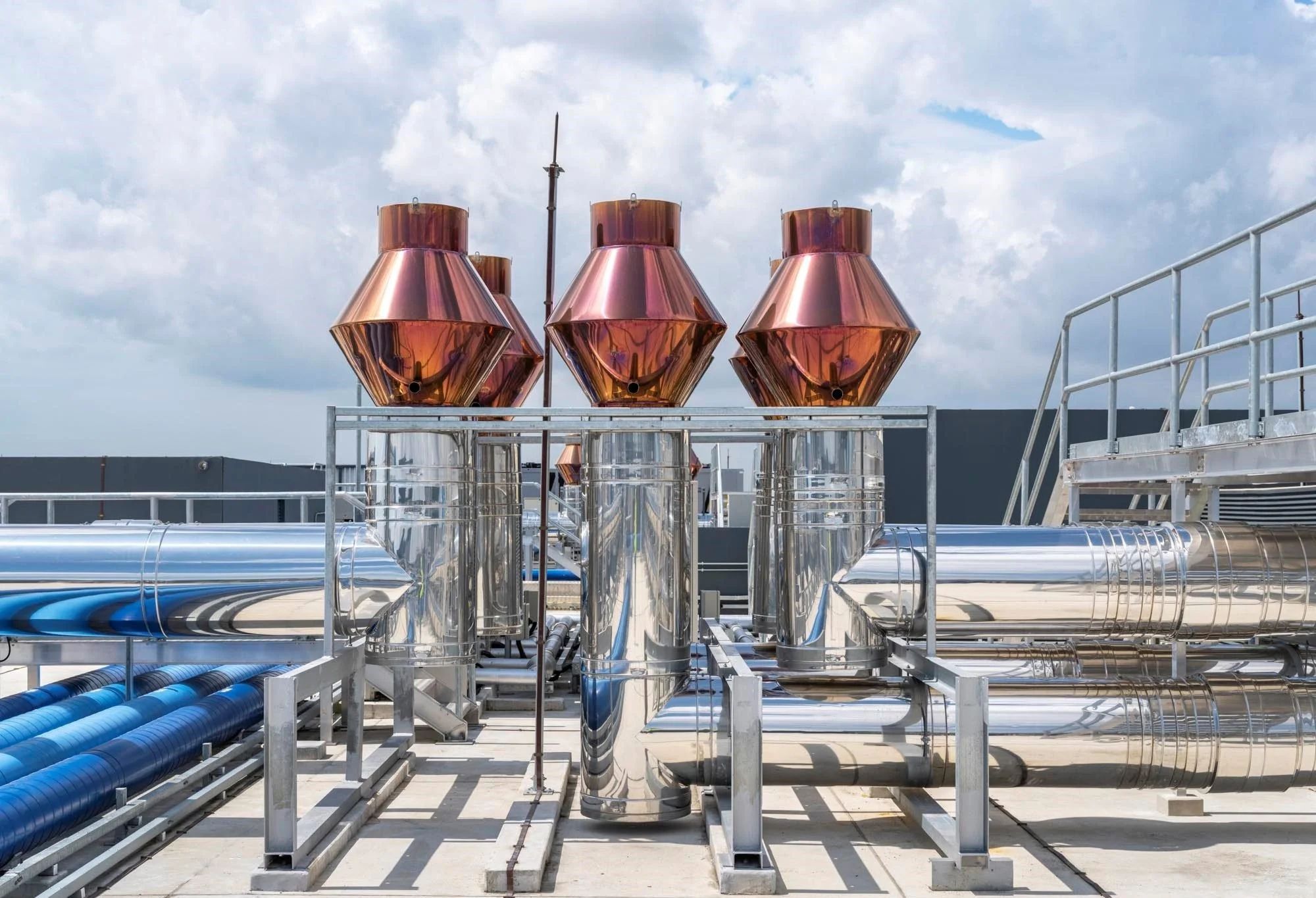
Data Centre Exhaust Systems: Key Considerations for Reliable Operation
In today’s digital economy, data centre exhaust systems have become critical infrastructure, making the reliability of every supporting system more important than ever. From cloud computing to financial transactions and AI processing, uninterrupted performance is essential. Within this context, auxiliary systems must meet the same high standards as core IT equipment.
Among these, exhaust systems (flues or chimneys) play a vital role, particularly in applications involving backup generators and combustion equipment. Choosing the right exhaust solution not only ensures smooth operation, but also has a direct impact on safety, efficiency and regulatory compliance over the long term.
The role of exhaust systems in data centres
Data centres are designed to operate continuously, 24/7, without interruption. In this demanding environment, exhaust systems must be capable of handling challenging conditions over extended periods. This includes high temperatures, pressure fluctuations and intensive duty cycles that can place significant stress on materials and components.
Backup diesel generators, for instance, are essential for maintaining uptime during power outages or grid instability. While these systems may not run continuously, they must perform instantly and reliably when required. However, they produce combustion gases that must be safely and efficiently discharged.
This is where the exhaust system becomes critical. It must be designed not only to evacuate gases effectively, but also to prevent backpressure, minimise heat loss and ensure safe dispersion into the atmosphere. Any failure can lead to reduced performance, increased fuel consumption, safety risks or even structural damage, including gas leaks or system degradation.
Key factors when specifying flue systems for data centre exhaust systems
When designing or specifying an exhaust system, several critical factors must be carefully considered:
1. Reliability under continuous operation
Even when generators are not in constant use, the system must deliver long-term reliable performance. Materials must withstand thermal expansion and contraction, as well as exposure to aggressive flue gases.
High-quality stainless steel systems, precision-engineered joints and robust support structures ensure durability. A well-designed system reduces maintenance and minimises the risk of unexpected failures, which is crucial in mission-critical environments.
2. Pressure resistance
In high-power applications, exhaust gas pressures can be considerable. Poorly designed systems can suffer from leaks or pressure losses, directly affecting performance.
For this reason, high-pressure exhaust systems require specialised solutions, including gas-tight sealing technologies, reinforced components and certified designs. Ensuring pressure integrity is key to both efficiency and safety.
3. Compliance with local standards
In markets such as the UK, meeting local regulations is non-negotiable. Standards govern aspects such as materials, fire resistance, emissions and installation safety.
Compliance ensures not only legal conformity, but also greater reliability and long-term durability. This is especially important in large-scale data centre projects.
Tailored solutions for data centre applications
Not all exhaust systems are created equal. Data centre environments require tailored solutions designed for their specific operational demands.
Key requirements include modular systems that simplify installation and maintenance, as well as materials with high corrosion resistance and temperature tolerance. Efficient design helps optimise gas flow, while minimising pressure losses and noise levels.
Other important factors include vibration control, thermal insulation and integration with building systems. Working with experienced manufacturers can significantly improve project outcomes.
Engineering as a driver of reliability
Beyond the product, engineering expertise plays a crucial role. A well-designed system begins with accurate calculations, including flow rates, temperature profiles and pressure requirements.
Proper sizing prevents issues such as backpressure or inefficient operation. Careful material selection ensures resistance to corrosion, temperature and mechanical stress.
Equally important is professional installation. Even the best system can fail if not correctly installed. Attention to assembly, alignment and sealing ensures optimal performance from day one.
Finally, maintenance considerations should not be overlooked. Systems designed for easy access allow for better inspection, reduced downtime and improved operational reliability.
Conclusion
In a sector where uptime is critical, exhaust systems should never be treated as an afterthought. Their correct specification is essential to ensuring safety, efficiency and compliance.
By investing in reliable, high-performance solutions — designed for continuous operation and high-pressure applications — operators can minimise risk, optimise performance and extend the lifespan of their infrastructure.
Ultimately, selecting the right exhaust system is a strategic investment in the overall reliability and resilience of the data centre.